 Gryphon Books for Writers
How to Write Fight Scenes: Pacing, Blocking, and Visceral Stakes
PN3355–3383 Library of Congress browsing range for Fiction: technique and authorship. Check your library’s catalog for each book’s call number.
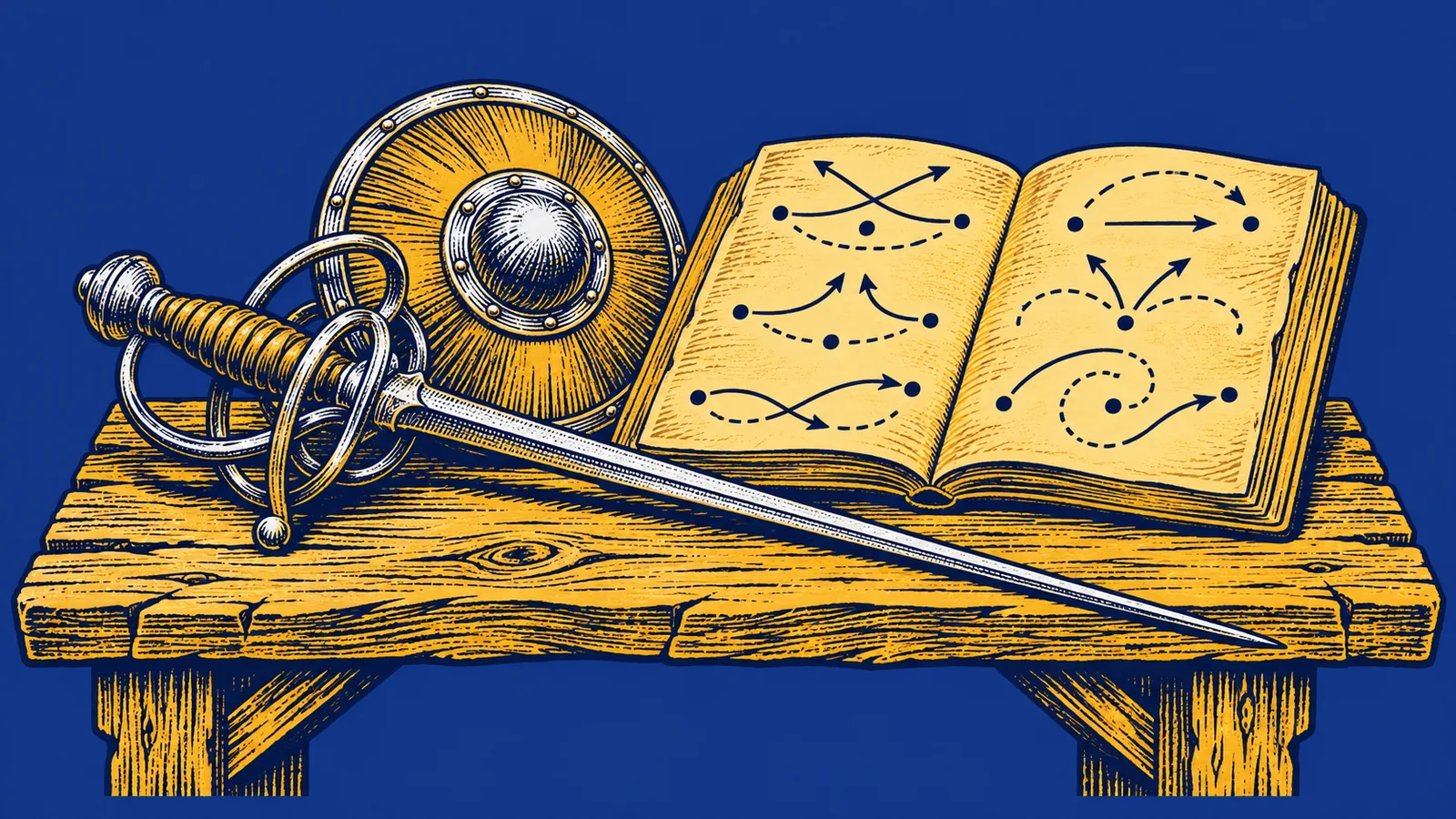
The trap of the blow-by-blow fencing manual
Fiction manuscripts often lose momentum the moment blades clear scabbards or fists collide. Writers frequently assume that realism requires an exhaustive record of every physical exchange. They catalogue high parries, ripostes, footwork angles, and blade binds as though transcribing a combat manual.
This approach stalls dramatic rhythm. Reading words takes far longer than watching physical motion on screen. A sword duel that occupies fifteen seconds in cinema can take five minutes to read if an author narrates every parry in technical terminology. By the fourth repetition of tierce and quarte, readers stop visualizing the clash and begin skimming for consequences.
Action in prose works through emotional escalation and sensory rhythm rather than technical choreography. When combatants clash, the reader cares about survival, terror, advantage, and desperation. The goal of the scene is not to prove that the author has studied seventeenth-century fencing manuals. The goal is to make the reader feel the physical peril of close combat.
Establish the physical arena and spatial geometry
A believable brawl or duel begins with clear spatial boundaries before the first strike lands. If the reader cannot picture the room, furniture, footing, and lighting, the combatants seem to fight in an empty white void. Later, when an author suddenly introduces a convenient iron poker or heavy chair, the object feels like an unearned contrivance.
Establish the geometry of the space during the opening moments:
- Surface conditions. Wet cobblestones, loose gravel, rotting floorboards, or thick tavern rushes directly alter footwork, balance, and traction.
- Available light. Flickering torchlight, heavy shadows, blinding window glare, or smoke obscure sightlines and conceal weapon tips.
- Physical boundaries. Low ceilings prevent overhead swings with long blades. Narrow corridors crowd combatants into close infighting where daggers and elbows matter more than swords.
- Environmental hazards. Roaring hearth fires, broken ceramic mugs, steep staircases, and open windows create immediate tactical pressure.
In Fight Directing for the Theatre (1996, J. Allen Suddeth on Open Library), J. Allen Suddeth explains that stage combat requires careful spatial mapping and deliberate sightlines so an audience always grasps who holds tactical control. Novelists need the same spatial discipline. Before drafting, draw a quick sketch of the room on scrap paper, marking doors, tables, and the starting positions of every character. For structured planning methods, see our guide on brainstorming tools for novelists.
Combat distance dictates weapon effectiveness. In historical martial arts, fighters operate at three primary ranges:
- Out of distance. Both fighters stand beyond reach. They circle, measure distance, seek openings, and watch for tells.
- Striking distance. A single step or lunge brings a weapon into contact. This is the range of cuts, thrusts, and parries.
- Grappling distance. Combatants close chest to chest. At this range, long blades become clumsy levers. Fighters resort to pommel strikes, knees, eye gouging, and wrestling for leverage.
When writers ignore these distances, fight scenes lose physical friction. For detailed specifications on historical blade reach, weapon weights, and harness mobility, consult our reference guide to arms and armor for writers.
Control pacing through sentence architecture and whitespace
Pacing on the page mimics the physiological tempo of physical danger. When adrenaline surges, human perception narrows and thoughts fragment. Lengthy sentences filled with dependent clauses create a calm, analytical tone that destroys urgency.
To accelerate narrative pace, trim sentence architecture:
- Shorten sentence length. Strip subordinate clauses and front-load active verbs. Direct subject-verb constructions push the narrative eye forward rapidly.
- Cut internal monologue. During active grappling, characters do not ponder philosophical motives or compose elaborate plans. They react on instinct and reflex.
- Break paragraphs frequently. Paragraph indents and blank space act as visual pauses. Single-line paragraphs create impact, signaling sudden shifts in leverage or shocking blows.
- Expand time during decisive moments. Slow down right before an irreversible act. Describe the brief freeze when an opponent slips on blood, giving your protagonist one heartbeat to strike or flee.
In Techniques of the Selling Writer (1965, Dwight V. Swain on Open Library), Dwight V. Swain introduced the concept of the Motivation-Reaction Unit. Swain proposes a way to arrange stimulus and response clearly in prose: first comes the external stimulus (the motivation), followed by the character's reaction. Swain's craft model orders a reaction as feeling, reflex, then rational action or speech; a passage need not include every component (Explanation explicitly based on Swain):
- Feeling, such as recoiling, blinking, or experiencing a sudden spike in heart rate.
- Reflex, such as ducking, lifting a buckler, or striking back.
- Rational action or speech, such as shouting a warning or assessing an exit.
Reversing this sequence by placing thought before reflex makes the action feel artificial and delayed. Writing craft resources published by Writer's Digest and The Writing Cooperative frequently recommend this structure because it keeps the protagonist grounded in sensory reality rather than intellectual detachment.
Ground the action in visceral sensory details
Violent confrontation is a sensory assault, but it rarely matches what inexperienced writers assume. In popular fiction, characters see every swing in crisp detail while feeling sharp, instantaneous pain. In reality, traumatic physical encounters trigger severe physiological changes.
Acute stress can disrupt fine motor control and alter pain perception, but responses vary by person and situation (Research review). Under extreme stress, the human nervous system initiates possible responses, not mandatory effects:
- Tunnel vision. The visual field constricts sharply. A character fixates on an opponent's weapon hand, failing to notice a second attacker approaching from the periphery.
- Auditory exclusion. Explosive shouts and crashing furniture can fade into a muffled roar, while small immediate sounds, like the scrape of steel or ragged breathing, sound deafeningly loud.
- Loss of fine motor control. Fingers can turn clumsy under pressure. Reloading a firearm, picking up a dropped dagger, or unbuckling a sheath becomes difficult.
- Delayed pain response. Pain under stress can decrease or increase, and severe trauma does not always feel like sharp agony in the heat of a clash. Impacts can feel like dull, heavy hammer thuds. A character might not realize an edge opened their arm until they notice warm wetness soaking their sleeve or their grip failing from blood loss.
Martial artist Carla Hoch documents these physiological realities at FightWrite, demonstrating how shock, adrenaline, and exhaustion govern real combat behavior. Incorporating these neurological limits prevents your characters from behaving like invulnerable action figures.
Sensory selection makes combat tangible. Avoid generic descriptions like "the clash was brutal." Instead, anchor the scene in specific physical impressions:
- The sour, metallic smell of copper and adrenaline sweat hanging in an enclosed room.
- The bone-deep vibration rattling up an arm when a parrying hilt catches a heavy blade.
- The sudden loss of breath when a heavy knee drives into the diaphragm.
- The stinging blur of sweat and grit washing into an open eye.
In By the Sword (2002, Richard Cohen on Open Library), Olympic fencer and historian Richard Cohen illustrates how real combatants in historical duels faced overwhelming psychological dread, nausea, and swift physical exhaustion. Sustained exertion can tire even a trained fighter; duration depends on the encounter, equipment and conditioning. Letting your characters experience exhaustion makes victory feel earned.
Anchor every exchange in emotional stakes and changing objectives
A fight scene must function as an accelerated story arc, not an athletic demonstration detached from the plot. If the narrative state remains unchanged after the fighting ends, the scene is empty spectacle. Every clash must alter the power dynamic between characters and carry irreversible consequences.
In Plot & Structure (2004, James Scott Bell on Open Library), James Scott Bell emphasizes that conflict must continuously test a character's core desires while driving the narrative toward unexpected developments. For a fight scene to engage the reader, combatants need clear, evolving micro-goals:
- The initial goal. Why did the fight start? One character may want to capture a prisoner, while the other wants to escape through the alley door.
- The disruption. An unexpected event shatters the original plan. A weapon breaks, an ally falls, or a lantern ignites a stack of straw.
- The revised goal. The balance shifts. The character who wanted to capture the enemy now scrambles simply to reach a dropped blade before being pinned.
- The resolution and aftermath. The encounter concludes with a permanent change in physical status, social standing, or tactical advantage.
To build layered motivations that sustain dramatic friction across combat sequences, review our guide to goal, motivation, and conflict.
Sol Stein notes in Stein on Writing (1995, Sol Stein on Open Library) that dramatic interest depends on maintaining an imbalance of power. A fight where both characters exchange equal blows with predictable symmetry bores the reader. One combatant should dominate, pressuring the other into desperate, messy improvisation.
Historical context also dictates the stakes. In many historical periods, getting into a street brawl carried severe legal and social ramifications. The Historical Novel Society often features discussions on how period customs, dueling codes, and local magistrates shaped the way historical figures approached violence. A protagonist who draws steel in a crowded city square faces both physical injury and criminal arrest, exile, or retaliatory blood feuds.
Common combat blunders in fiction manuscripts
When reviewing fight scenes in fiction manuscripts, editors regularly spot recurring blunders that shatter reader immersion. Recognizing these habits during revision will strengthen your prose:
- Conversational banter during exertion. Characters exchanging snappy, complete sentences while wrestling or dodging lethal cuts ring false. Intense physical combat demands immense cardiovascular effort. Limit dialogue to single-word shouts, gasps, curses, or brief desperate commands.
- Hollywood invulnerability. Characters who take heavy blunt force to the skull, break ribs, or lose substantial blood cannot leap across tables thirty seconds later. Give physical trauma lasting consequences that persist into subsequent chapters.
- Symmetrical choreography. If every strike is met by a clean, textbook defense, the scene feels like a rehearsed stage dance. Real fights are chaotic, awkward, and ungoverned by ideal form. Include missed swings, slipping feet, fumbled grips, and desperate scrambles in the dirt.
- The floating opponent problem. When an author focuses intensely on the protagonist's movements, opponents often freeze in place like background extras awaiting their turn. Keep all participants active in the physical space. If three thugs ambush your protagonist, describe what the other two are doing while the hero grapples with the first.
- Technical vocabulary overload. Relying heavily on period fencing jargon or martial arts terms distances casual readers. Replace specialized terminology with direct sensory verbs and clear spatial motion.
To study how experienced authors balance narrative velocity with character development across different genres, browse our curated list of the best fiction craft books.
Next steps for choreographing your scene
Before drafting or revising your next combat sequence, work through this practical checklist to ensure your scene maintains narrative tension and visceral stakes:
- Chart the arena layout. Sketch the physical room, note light sources, and identify three interactive objects that characters can use as weapons, shields, or obstacles.
- Define the shifting objectives. Write down each character's goal at the start of the brawl, identify the sudden crisis that alters that goal, and determine the new objective required for survival.
- Apply the motivation-reaction sequence. Review each combat exchange to verify that physical instincts and sensory reactions precede conscious thought and dialogue.
- Audit your sentence lengths. Read the draft aloud. Tighten long sentences into clipped, energetic clauses as physical danger peaks, and use paragraph breaks to emphasize critical blows.
- Incorporate possible stress responses. Introduce sensory narrowing, clumsy hands, burning lungs, or altered pain perception as possible responses, not mandatory effects, to ground the violence in authentic human biology.
- Check the physical aftermath. Document the lasting injuries, damaged gear, and legal or emotional consequences that will affect your characters in the following chapters.