How to Plant Clues in a Mystery
Start with the solution when you plant a mystery clue. What evidence would the culprit leave, and what could that evidence seem to mean before the reader knows the truth? Put it on the page before the reveal. On a second reading, readers should be able to follow the deduction using information they had all along. You can send them after a red herring, provided you eventually explain what caused it.
That is easier to arrange in an outline than in a scene. Linger over a clue and you may give away the solution; bury it among the furniture and readers may forget it entirely. Give the people in the room a reason to care about the detail that differs from its eventual role in the solution.
Start with the answer and work backward
Before placing clues, write a private account of what actually happened. Include the culprit's goal, access, timing, method, and the actions taken to hide the act. Separate what happened from what each witness believes happened. Then ask which physical traces, changed routines, or contradictions the act would leave. Use goal, motivation, and conflict to work out why the culprit made those choices. The evidence should follow from what they wanted and what stood in their way.
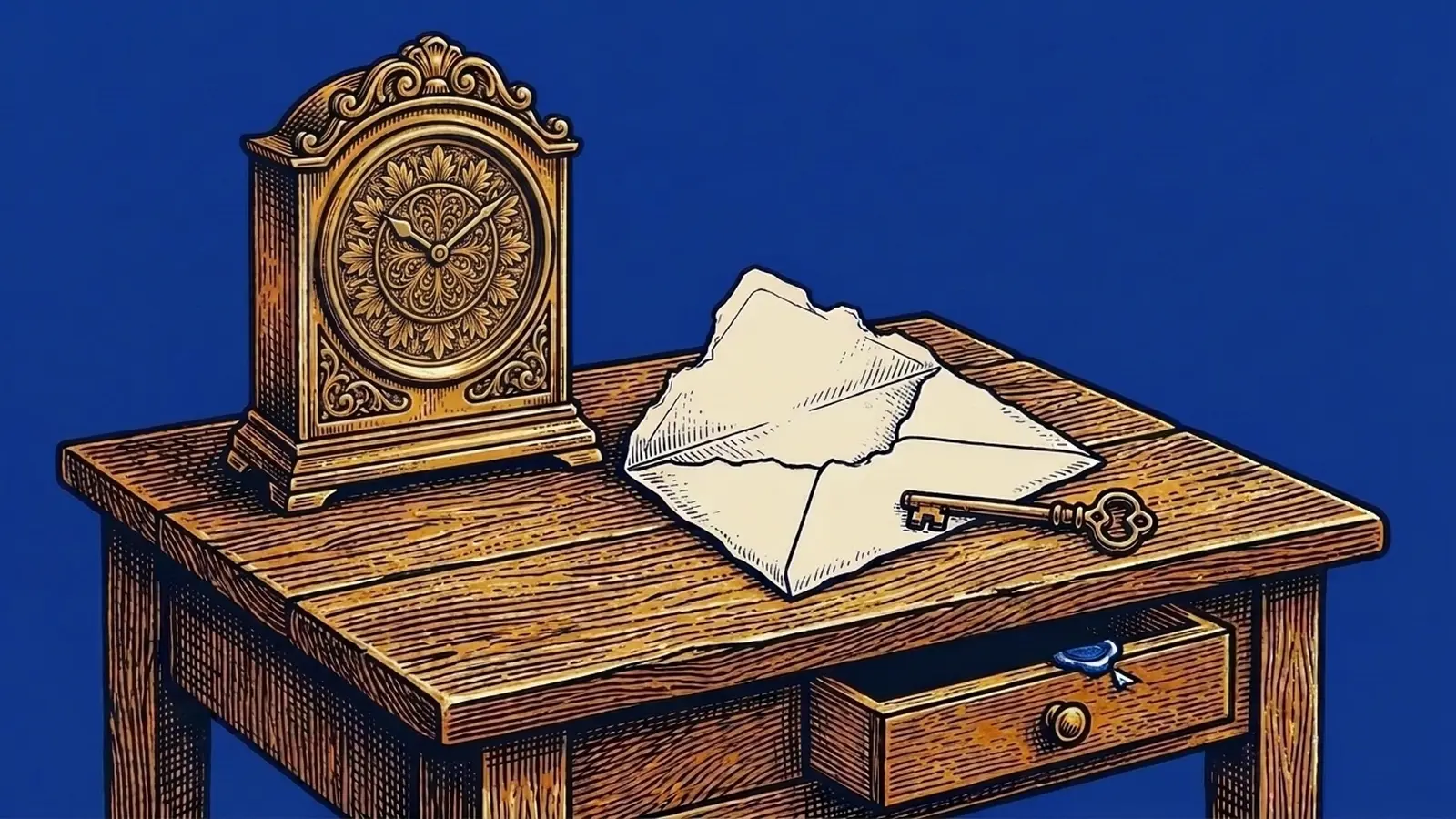
Take a small mystery at a private archive. A signed letter disappears from a locked display drawer during a reception. The curator believes the drawer remained locked because the key hung on its usual hook. In fact, the conservator removed the letter earlier, used the drawer for a copy, and returned the key. The conservator needed the original to conceal an alteration in the archive's provenance records.
Once you know what happened, you can choose the traces it leaves. The display label describes a fold that the copy lacks. A visitor remembers seeing a flattened corner before the reception. A faint line of blue sealing wax appears inside the drawer, although the original envelope used red wax. The conservator asks an oddly specific question about when the catalog was last photographed. None of these facts proves the theft on its own. Read together, they connect the swapped letter and the time window to someone who understood the catalog.
Choose clues that answer different questions. A clue to method may show that a swap was possible. A clue to opportunity may narrow the time. A clue to motive may explain why this particular object mattered. If every clue merely says that the conservator looks nervous, the reader has suspicion rather than a solvable case.
Give each clue two readings
A fair clue has a true meaning and an earlier, reasonable meaning. The earlier reading should follow from the information available at that point, not from a character behaving foolishly. For the wax in the drawer, the curator might assume a guest handled a sealed invitation near the display. That is credible if invitations with blue seals are visible at the reception. Later, the sleuth learns that the copied letter was kept in a blue-sealed folder, and the same fleck becomes evidence of the swap.
Write both readings beside each clue in your outline:
- Observable fact: A fleck of blue wax is caught in the drawer's felt lining.
- First reading: It came from a reception invitation.
- Later reading: It came from the folder that held the replacement letter.
- What changes the reading: The invitations are found to have printed blue circles, while the conservator's folders use wax seals.
Pay particular attention to the last line. What lets the sleuth change their mind? They need new evidence, or a connection between facts the reader has already seen. Saying that the sleuth suddenly "realizes" what the wax meant skips the reasoning readers need to follow. Let them see the fresh observation when the sleuth does.
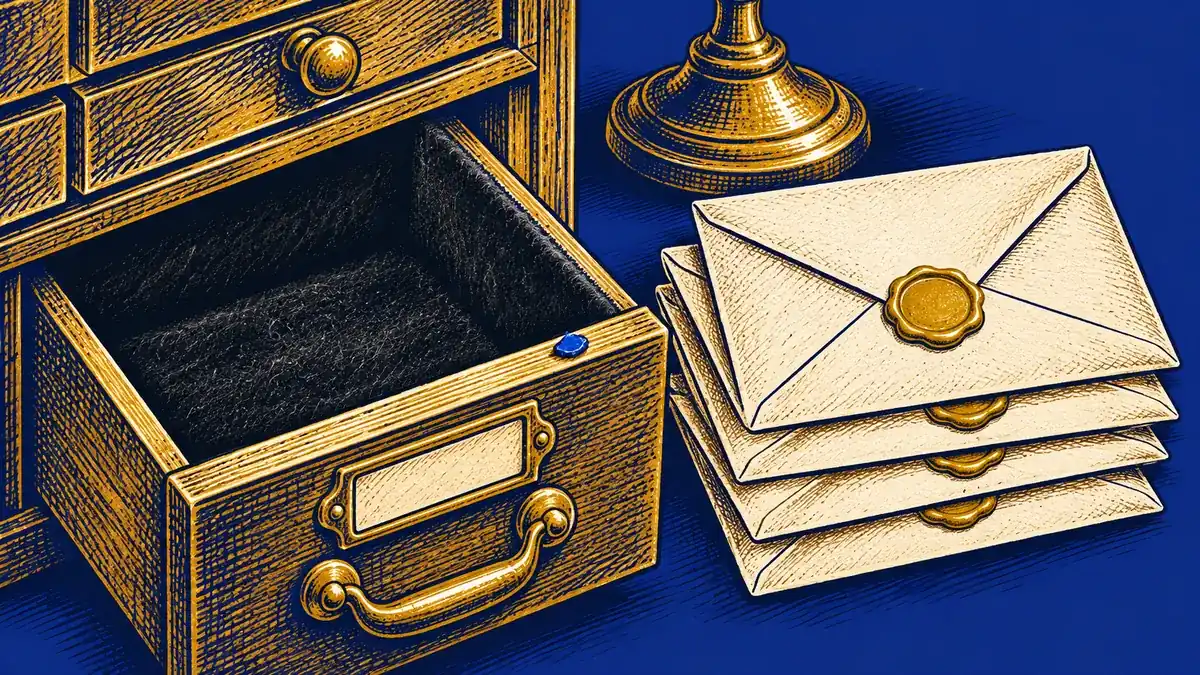
Describe enough for the reader to remember the clue: a blue fleck pressed into dark felt. A paragraph about its peculiar brightness would draw too much attention. The curator can notice it while brushing lint from the drawer and checking the lock, so the description grows out of something the character is already doing.
Hide a clue in plain sight with scene business
The strongest hiding place is often a scene that has another immediate purpose. While the sleuth questions the curator, the curator straightens the display and notices the wax. The conversation is about who held the key, so the reader has a reason to concentrate on the curator's answer. Readers can see the wax without being told how much it matters.
Something should change in the scene besides the amount of evidence collected. Perhaps a witness contradicts an earlier statement and strains a friendship, or the archive decides to cancel a public viewing. Readers then have a developing situation to follow as well as a clue to consider. Brainstorming tools for novelists can help keep separate notes for the scene's dramatic purpose and its puzzle purpose.
You can also place a clue beside a more emotionally urgent event. The sleuth sees a visitor slip a note into a coat pocket just as the curator finds wax in the drawer. The note demands attention, but the wax remains on the page. Describe both details clearly. If readers never got to see the wax, explaining it at the end will not make the deduction fair.
Consider the difference between these passages:
Too concealed: The curator looked over the drawer. Nothing seemed unusual, and the questioning continued.
Fairer: The curator brushed a blue fleck from the drawer's black felt, then asked who had last signed out the key.
In the second passage, readers see what the curator sees. The curator can still misunderstand it. If the sleuth is the viewpoint character and notices the fleck, account for why the sleuth files it away or misreads it. Do not have an attentive investigator ignore an obvious anomaly solely to preserve the ending.
Build red herrings from real causes
A red herring is a fact that supports a plausible wrong conclusion. It should not be a lie told by the narrative voice. A character may lie, but the story must give that person a reason. Kris Calvin's discussion of red herrings emphasizes that suspects' secrets need motives of their own. Apply that test to your false leads. What in this person's life makes them act this way, even if it has nothing to do with the crime?
At the archive, a volunteer hides a torn shipping receipt. That looks like evidence of a sale. In fact, the volunteer has been sending uncataloged family papers to a relative and fears losing access to the archive. The receipt still pays off. It reveals why the volunteer lied about being in the storeroom and supplies a record of who entered before the reception. Even though the suspicion was wrong, investigating it has turned up something the sleuth can use.

Give a red herring three parts: a visible trigger, a tempting inference, and a later correction. The trigger might be the receipt. The inference is that the volunteer sold the letter. The correction is a matching parcel record for unrelated papers. Use the correction to open a new line of inquiry where you can. The investigation can then move on from what the sleuth learned.
Avoid making every suspect suspicious in exactly the same way. One person can hide a relationship, another can misremember a time, and a third can protect a colleague. Their secrets should differ in scale and consequence. When every suspect dodges questions in the same way, readers have little to distinguish them. They may stop weighing the evidence and wait to be told who did it.
An innocent suspect's conduct should make sense after the reveal. If someone burns a note, establish what they feared the note would expose. If someone lies about the hour, reveal the appointment they wanted to keep private. The explanation may resolve an emotional question without adding forensic evidence. It still needs to account for the behavior that made readers suspicious.
Order revelations so each answer changes the next question
Let the sleuth answer some questions before the final chapter. Each answer can change what they need to investigate next. First the sleuth establishes that the letter in the drawer is a copy. Then the evidence suggests the swap happened before the reception, clearing a guest who seemed likely. Next the catalog photographs show that the original was already altered. The question shifts from "who took the letter tonight?" to "who needed to hide what the original proved?"
A useful sequence is:
- Show a concrete anomaly that the sleuth and reader can see.
- Offer an interpretation that fits the current facts.
- Test that interpretation through an action or conversation.
- Disprove or narrow it with new evidence.
- Let the revised understanding point to the next inquiry.
Keep track of what the sleuth learns from each inquiry, even when it leads away from a suspect. The volunteer's receipt does not identify the thief, but the delivery record establishes the time of the conservator's last access. The wax does not prove motive, but it identifies a folder associated with the copy. The photograph does not show the thief, but it establishes why the original matters. By the ending, readers have seen the evidence they need to follow the solution.
Be careful with a twist that invalidates everything the reader has learned. It may surprise them, but it also takes away the evidence they were using to reason through the case. A Writer's Digest guide to murder mysteries describes fair play as sharing clues with readers even while directing their attention elsewhere. Put the facts in the story before the deduction depends on them.
Make the final deduction earn its place
The reveal should explain how the culprit acted and why the earlier readings failed. Return to the important clue in its original context. The reader remembers the curator brushing away blue wax, the conservator asking about catalog photographs, and the absence of the original fold in the displayed letter. Explain how those details connect.
Test the chain against other suspects. Could the volunteer have made the copy? The delivery record may place the volunteer in the building, but the photographs and folder history link the conservator to both the alteration and the swap. Could the curator be responsible? The curator controlled the key, but the copy was installed before the key was moved. The evidence needs to support the conclusion even without the culprit's confession.
The final scene can still contain danger, argument, or an unexpected choice. It should not introduce an essential unseen chemical test, unknown witness, or newly discovered twin. If the reader needs a new fact to understand the solution, move that fact earlier and let the final scene reveal its connection.
Audit the clue trail in revision
You may know the culprit before you start, or discover who did it as you draft. During revision, check that the evidence on the page supports the explanation you eventually settled on. Hallie Ephron's Writing and Selling Your Mystery Novel covers planning and revising mystery fiction. Patricia Highsmith's Plotting and Writing Suspense Fiction takes up suspense plotting. For advice from several mystery writers, see How to Write a Mystery, edited by Lee Child and Laurie R. King, a collection from Mystery Writers of America contributors.
Make a simple clue ledger during revision. Give each significant fact a row with its first appearance, the initial interpretation, the later correction, and the final use. Include the viewpoint character's knowledge at each appearance. If the detective has worked out more than the viewpoint lets readers know, revise those passages. If a clue has no early appearance, plant it. If a detail never changes an inference or a scene, consider removing it.
Read the manuscript once as a solver who does not know the answer. Stop before every revelation and list what can be deduced at that point. Can the reader suspect a swap before the sleuth confirms it? Can they identify a credible culprit before the final accusation? They do not need to solve everything, but they should be able to defend a theory with evidence from the story.
On the next read, keep the answer in mind and check the culprit's actions against it. An oddly timed question may look like curiosity on a first pass and damage control on a second. A gesture added only to look sinister will seem out of place once you know what the culprit was doing.
Ask a test reader where they suspected each person and what evidence changed their mind. A correct guess is not automatically a failure. If the reader guessed from clues and still wanted to see the case proved, the story may be working. If they guessed only from genre habit, such as choosing the least suspicious person, give them more evidence to work with. If they could not suggest any possible solution before the reveal, check for a missing link.
Common clueing mistakes
The clue arrives too late. A fingerprint result disclosed during the accusation cannot help the reader reason earlier. Move the result before the confrontation, or make it corroboration rather than the sole basis of the solution.
The clue has one loud meaning. A unique monogram at the scene points straight to its owner. Give the object a credible path through another person's hands, or use it to raise a narrower question rather than identify the culprit immediately.
The red herring vanishes. A suspect lies for several chapters and is then silently dropped. Let the investigation uncover the real reason for the lie and use that discovery to change a relationship, a timeline, or another inference.
The sleuth withholds a deduction from the viewpoint. A viewpoint that reports the sleuth's thoughts cannot hide a completed solution simply to surprise the reader. Show the uncertainty honestly, or choose a viewpoint with limited access to that thinking.
The ending explains instead of demonstrates. A long speech may name every clue without showing the links among them. Let the sleuth test one disputed fact in the scene, then explain the remaining chain briefly. If your outline cannot show the chain in a few clear steps, the puzzle may need another revision.
Questions writers ask about mystery clues
How many clues should point to the culprit?
Use enough independent clues to support method, opportunity, and motive. There is no useful fixed count. Three clues that answer different questions are stronger than ten variations of the same nervous glance. Add enough false readings to keep the investigation active, but give each one a clear reason to exist.
Should the reader be able to solve the mystery before the detective?
The reader should have a fair chance to form the right theory before it is confirmed. They do not need to know every detail. A satisfying reveal usually clarifies why several earlier facts belonged together, rather than presenting the only fact that could possibly identify the culprit.
Can a red herring be an outright lie?
A character can lie if the lie has a believable motive and consequences. The narration should not quietly falsify an observed fact. The distinction matters most in close viewpoint: describe what the character sees and thinks, then let later evidence expose the mistaken conclusion.
When should I plant the decisive clue?
Place it early enough for the reader to remember and reconsider it, then refresh it through a later scene before the ending. A clue can appear near the start, but its meaning may depend on evidence supplied much later. The order of interpretation is as important as the order of appearance.