 Gryphon Books for Writers
Medieval Daily Life for Fiction Writers: Busting Pop-History Myths
DA129–260 Library of Congress browsing range for Medieval England, to 1485. Check your library’s catalog for each book’s call number.
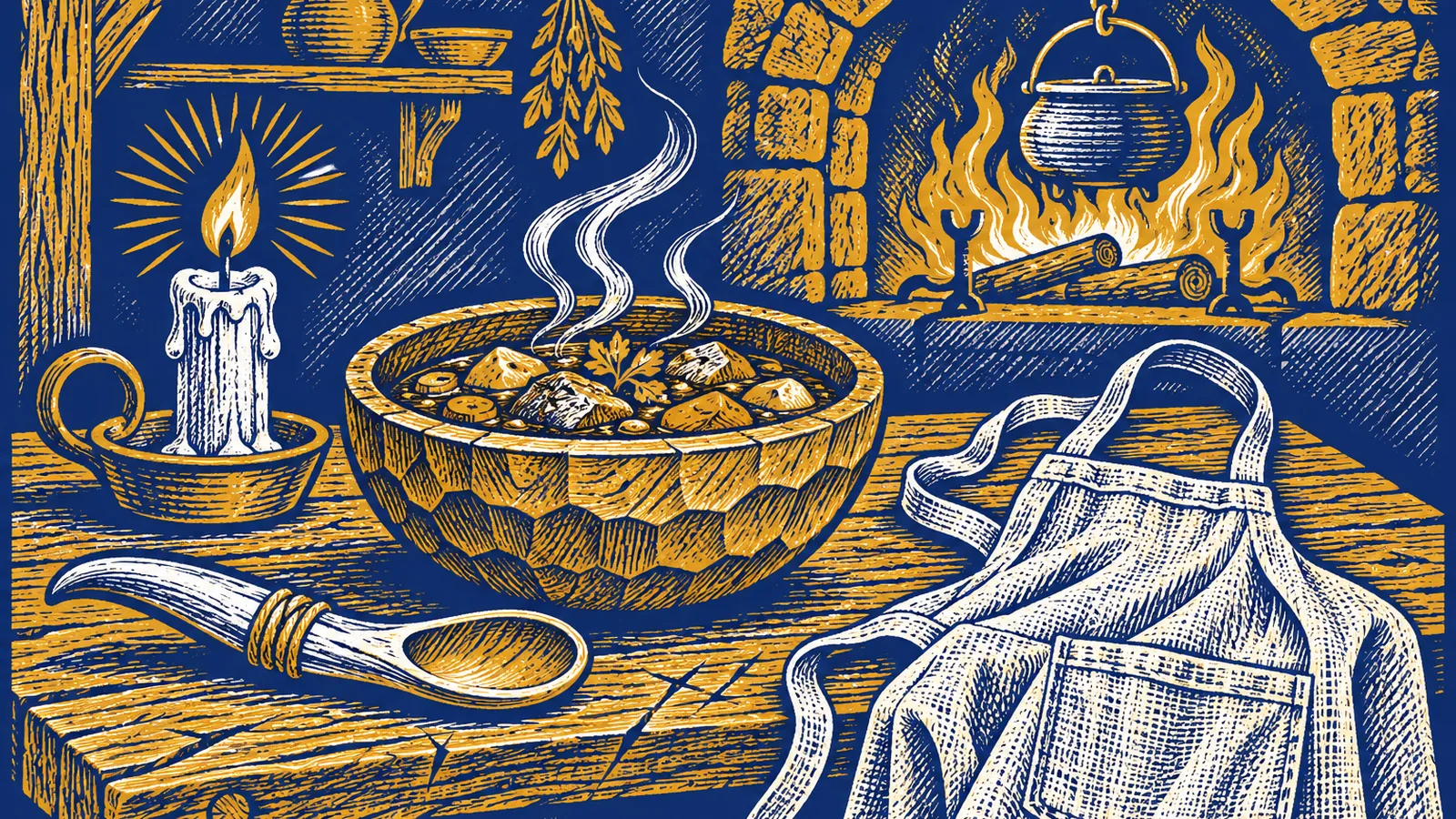
The mud and misery trap in period fiction
Pop culture has saddled the European Middle Ages with relentless gloom. Film and television show characters trudging through mire in mud-caked rags. Hollywood shorthand and Victorian misconceptions created this grimdark look. Victorian historians often exaggerated medieval misery to celebrate industrial progress, leaving novelists with inherited clichés about squalor and ignorance. This guide focuses on later medieval England; continental examples are identified separately.
Fiction that leans on these tropes misses the genuine texture of medieval life. When every character is filthy, hopeless, and starving, a story becomes monotonous. Historical fiction draws its power not from cartoonish cruelty, but from physical constraints: the price of firewood, seasonal rains, church bells, and communal obligations. Understanding how ordinary people lived gives you sharper conflicts and practical stakes.
To build a convincing medieval world, replace pop-history myths with administrative and archaeological facts. For a framework on handling primary sources, consult our guide on how to research a historical novel. When your story centers on English manorial life, our medieval England research guide maps out manor court rolls and coroner inquests. Daily medieval existence was demanding and seasonal, but it was never devoid of cleanliness, comfort, or community.
Cleanliness, soap, and the myth of universal filth
The most pervasive pop-history myth claims that medieval people never bathed and feared clean water. In reality, medieval culture valued bodily cleanliness. Humoral medical theory taught that health required open pores and skin cleared of sweat.
Handwashing was customary before and after meals, driven by etiquette and necessity when sharing dishes. Wealthy households used metal ewers and basins scented with rosewater; peasant homes kept an earthenware pitcher and linen towel near the table. People cleaned teeth by rubbing them with linen cloth, using powders of burnt salt, sage, or charcoal to remove tartar and freshen breath.
Public bathhouses, known as stews or bagnios, operated across European cities throughout the High and Later Middle Ages. Municipal records from Paris, Frankfurt, and London show dozens of regulated establishments where customers bathed in warm wooden tubs, ate together, and received barbering services. In London, these businesses lined the Southwark bank of the Thames. Bathhouses declined only in the late fifteenth century, when epidemics of syphilis made shared public tubs dangerous.
Personal laundry formed the basis of hygiene. Even if a peasant owned only one wool kirtle, they owned several linen smocks, shirts, and braies (underbreeches). Linen sat against the skin, absorbing sweat and body oils. While heavy wool was brushed, aired, and spot-cleaned, linen was washed regularly in tubs with wood-ash lye. In Medicine & Society in Later Medieval England (1995, Carole Rawcliffe on Open Library), Carole Rawcliffe shows that town councils and hospitals enforced sanitary rules, funding public latrines, regulating butchers, and penalizing residents who fouled waterways.
Civic bylaws preserved in The National Archives and digitized on British History Online show that towns fought filth constantly. Councils appointed rakers to cart dung outside the gates, ordered householders to sweep street fronts, and fined butchers who dumped offal into gutters.
Seasonal tables, the hungry gap, and the ale question
Two contradictory myths dominate medieval food: either peasants eat gray gruel year-round, or taverns serve roast turkey legs and potatoes. Both depictions fail. New World crops like potatoes, maize, tomatoes, and turkeys were unknown in Europe. Food followed the seasons, religious rules, and local soil.
Many writers assume people drank only ale because water was lethal. Medieval people knew the difference between fouled and pure water, drinking freely from springs, brooks, and deep wells. In the thirteenth century, London built the Great Conduit, bringing spring water through lead pipes from Tyburn into Cheapside for public use. People drank ale primarily for sustenance: it provided calories, hydration, and grain nutrients needed for hard labor. Because unhopped ale spoiled quickly, households and brewsters brewed fresh batches weekly.
For ordinary farming families, the dietary anchor was pottage, a thick porridge of grains and legumes. Depending on the season, pottage combined barley, oats, field peas, fava beans, leeks, onions, cabbage, and herbs. On workdays, cooks added salt pork, bacon, or lard for flavor and fat. Most peasant cottages kept a pig, which fed on autumn acorns and yielded salted pork and sausages for winter.
Another myth claims cooks used heavy spices to disguise rotten meat. Spices like pepper, cinnamon, ginger, and saffron were expensive luxury imports from Asia. No householder wasted costly spices on spoiled meat that could cause sickness. People preserved meat by salting, smoking, drying, and pickling. Guild searchers inspected meat markets daily, confiscating spoiled cuts and pillorying dishonest butchers.
The farm calendar brought genuine hardship during the "hungry gap" in late spring and early summer, from May through July. The previous autumn grain was running low, and new crops were not yet ripe. Families turned to wild greens, early cabbage, nettles, and thin grain washes. Christopher Dyer examines these seasonal diets, wages, and grain budgets in Standards of Living in the Later Middle Ages: Social Change in England c. 1200-1520 (1989, Christopher Dyer on Open Library). For primary estate accounts and food allocations, consult the Fordham Internet Medieval Sourcebook.
The religious calendar also governed menus. Church rules restricted food on many days, but the calendar and prohibited foods varied by place and period (Historical discussion of differing fasts and restrictions). Check the relevant practice before deciding whether a particular character could eat meat, eggs or dairy. For over a third of the year, people ate fish, grain, and vegetables. Inland households relied on salted herring, pickled eel, and dried cod (stockfish), which required hours of soaking before cooking.
The economy of candlelight and the real cost of dark rooms
In period dramas, castle halls and taverns stay lit by candles and torches until dawn, ignoring the cost of artificial light. In the medieval world, light was an expensive commodity, and darkness was the baseline of night.
Candles were either beeswax or tallow. Beeswax burned cleanly with a sweet honey scent, but a pound could cost an artisan a full day of wages. Beeswax was restricted to church altars, royal courts, and wealthy nobles.
Common households used tallow candles made from mutton or beef fat. Tallow burned with a smoky yellow flame, smelled of animal grease, and guttered fast. If the wick was not trimmed regularly, the candle melted into a puddle of fat. Even tallow candles were burned sparingly.
Poor rural families relied on rushlights. They harvested meadow rushes, peeled away the green rind to expose the pith, dried them, and pulled them through melted fat. Held in a clip, a rushlight gave modest light; its burn time depended on the rush's length and preparation (Museum of English Rural Life; Huntington's lighting history).
Pitch torches were rarely burned indoors. Falling cinders and choking fumes made them dangerous inside timber and thatch buildings. Lighting varied by setting and fuel. Do not assume smoky pitch torches were routine cottage lighting, or that every kind of torch was confined outdoors (Historical banquet lighting discussion).
At dusk, town bells rang the curfew (from couvre-feu, cover fire). Householders were required by law to bank hearth fires with ash to prevent fires. After curfew, streets went black, and people went to sleep.
Segmented sleep and midnight waking hours
Modern writers routinely have characters sleep in a single eight-hour block. In At Day's Close: Night in Times Past (2005, A. Roger Ekirch on Open Library), A. Roger Ekirch argues that segmented sleep was widespread in preindustrial Europe. Its prevalence and interpretation remain debated (Scholarly reassessment); use evidence for your setting rather than assigning every household the same schedule.
For an hour or two between sleeps, people got up or rested quietly. They stoked the hearth, checked livestock, brewed herbal drinks, talked, or visited neighbors. Many used this quiet hour for prayer. Couples also used this window for intimacy, as field exhaustion had passed. People then returned to bed for their "second sleep" until dawn.
Bedding indicated wealth. Laborers slept on a straw-filled palliasse, while prosperous families owned wooden frames with rope webbing, wool mattresses, feather pillows, and linen sheets. Bedding was so prized that wills routinely bequeathed it by name.
Homespun dyes, woolen weaves, and colorful commoners
Popular culture often dresses the medieval poor in burlap and dull gray. Peasants lacked fine silk and ermine, but they loved color and wore it regularly.
Wool was the dominant cloth, alongside linen and hemp. While unbleached wool served for heavy field labor, natural vegetable dyes were inexpensive and widely used:
- Woad (Isatis tinctoria) produced blues from pale sky to slate.
- Madder root (Rubia tinctorum) gave warm terracotta and brick red.
- Weld (Reseda luteola) yielded bright yellows and greens when paired with woad.
- Walnut hulls and oak galls produced deep, warm browns without costly mordants.
Manuscripts like the Luttrell Psalter show peasants harvesting fields in red hoods, blue tunics, and green kirtles. Fourteenth-century sumptuary laws were enacted not because peasants wore gray rags, but because commoners were buying dyed wools and decorative trims that blurred social ranks.
In Life in a Medieval City (1969, Frances and Joseph Gies on Open Library), Frances and Joseph Gies detail how thirteenth-century households managed clothing. Wardrobes were small but sturdy: a linen shift, tied wool hose, a kirtle, a hood with a liripipe, and greased leather turnshoes. For dialogue reflecting this vocabulary of cloth, tools, and trades, see our guide on writing historical dialogue.
Putting daily routine to work in your scenes
Grounded domestic details give historical fiction tension and sensory weight. Rather than treating period research as static background, build these physical realities into your plot:
- Use lighting costs for scene tension. A nighttime scene in a common cottage should feel dark and confined. Characters cannot light a room instantly; they must strike flint and steel or rely on a foul-smelling tallow dip that flickers and gutters.
- Anchor conversations to physical chores. Let characters pluck poultry, salt pork, card wool, grease turnshoes, or sweep the hearth while speaking.
- Treat midnight waking as a possibility rather than a universal routine. Where characters observe segmented sleep, the quiet interval between sleeps is ideal for clandestine meetings, confessions, or theft.
- Use the hungry gap to fuel conflict. An early summer food shortage raises the stakes of rent collections, tax demands, and local rivalries far more believably than generic villainy.
- Show wealth through household objects. Contrast a peasant wooden trencher and straw palliasse with a merchant brass pot, feather bolster, and beeswax taper.
To organize these material details across chapters and maintain consistent worldbuilding, read our guide on keeping research notes for novelists.
Next steps and core reference shelf
Grounding a medieval novel requires moving past screen clichés to consult economic histories and administrative records. Real daily routines make your setting feel convincing and alive.
To build your reference shelf, start with these essential books:
- Christopher Dyer, Standards of Living in the Later Middle Ages: Social Change in England c. 1200-1520 (1989, Christopher Dyer on Open Library). Economic analysis of medieval wages, budgets, and food consumption.
- Frances Gies and Joseph Gies, Life in a Medieval City (1969, Frances and Joseph Gies on Open Library). A clear account of domestic life, guilds, and municipal customs in medieval Troyes.
- Ian Mortimer, The Time Traveler's Guide to Medieval England (2008, Ian Mortimer on Open Library). Practical survey of fourteenth-century hygiene, clothing, travel, and daily customs.
- A. Roger Ekirch, At Day's Close: Night in Times Past (2005, A. Roger Ekirch on Open Library). Foundational study of segmented sleep, night watches, and lighting history.
- Carole Rawcliffe, Medicine & Society in Later Medieval England (1995, Carole Rawcliffe on Open Library). Examination of humoral theory, medieval hospitals, and municipal sanitation.
For ongoing research, consult Medievalists.net for current scholarship on material culture. Explore town bylaws and manor proceedings through The National Archives and British History Online. Using these sources will ensure your characters walk through a physical world with real weight, scent, and texture.